Operational leadership for the band where the CEO is also doing it.
A fractional COO engagement gives mid-market operators a senior operations peer in the leadership team — someone who owns the operating plan, leads the change programme, and partners with the CEO on the day-to-day mechanics of running the business. Without a permanent six-figure hire while the business is still proving the shape of the role.
The COO role, scoped to the work that actually matters.
Operational planning and KPIs.
An honest operating plan with a small number of KPIs the leadership team actually reviews. Weekly metrics, monthly reviews, and quarterly resets aligned to the commercial plan.
Process design and redesign.
Mapping the operational reality across finance, order management, supply chain, and production. Identifying where the work is breaking down, where automation belongs, and where the process itself needs to change first.
Team structure and accountability.
Organisational design that fits the operation as it is and as it is becoming — including the structural changes that AI and automation make possible. Role clarity, span of control, ownership of outcomes.
Change management and adoption.
The human side of operational change. Honest communication, training, the executive sponsorship that carries a programme through the inevitable trough, and the steering that maintains momentum.
Vendor and supplier oversight.
Commercial and operational governance of the third parties your business depends on — outsourced operations, logistics, banking partners, software vendors. Contractual posture, SLAs, and the working rhythm that keeps them honest.
Scale-up and integration readiness.
Operational preparation for the next stage — a funding round, an acquisition, an international expansion, a post-acquisition integration. The operational due diligence story, and the runbook to execute against it.
Built for the band between "the CEO does it" and "we have a COO".
- Mid-market operators (€5M–€500M) where the CEO or MD is also acting as the de-facto COO.
- Founder-led businesses past the point where a single operator can hold the whole picture.
- Companies preparing for or just past a transition — funding, acquisition, ERP replacement, or a step change in volume.
- Operations leaders who need a senior peer to challenge thinking and share the load through a hard period.
- PE-backed portfolio companies where the sponsor wants operational uplift without a permanent senior hire.
A predictable cadence, with outcomes you can put on a board pack.
Two-week orientation.
We meet your leadership, sit with the operational teams, review the management information, and read the commercial plan. You leave with a candid read on operational health and a draft mandate for the engagement.
A defined monthly cadence.
Typically one to four days per month, depending on company size and pace. Fixed time on-site for leadership meetings, ops reviews, and one-to-ones. Available between sessions for the decisions that cannot wait.
Outcomes, not hours.
Every quarter has a small number of defined operational outcomes — a process redesigned, a KPI moved, a team restructured, a vendor renegotiated, a programme landed. Reviewed openly with the CEO and the board.
A clean handover when the time comes.
Most engagements run 12–36 months. We help you scope, hire, and onboard a full-time COO or operations director when the business is ready — with playbooks, relationships, and roadmap intact.
Engagements are led personally by Sylvia Stafford.
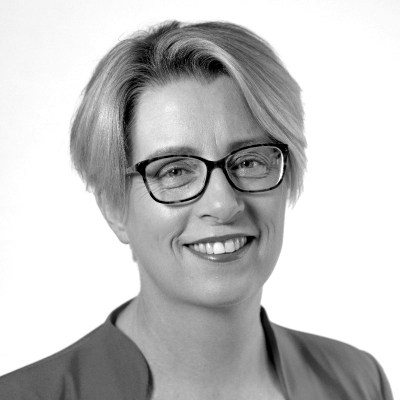
Sylvia Stafford
Over 20 years in commercial and operational leadership across healthcare, technology, and logistics. Has led post-acquisition integrations, operational restructures, and large-scale change programmes at group level. Leads Apridata's consulting practice, where she partners with mid-market operators on the human side of operational change — process redesign, organisational design, and the executive alignment that makes or breaks a transformation. Fluent across both the commercial and operational sides of the business, and equally comfortable in a board room, a finance off-site, and on the floor with the team doing the work.